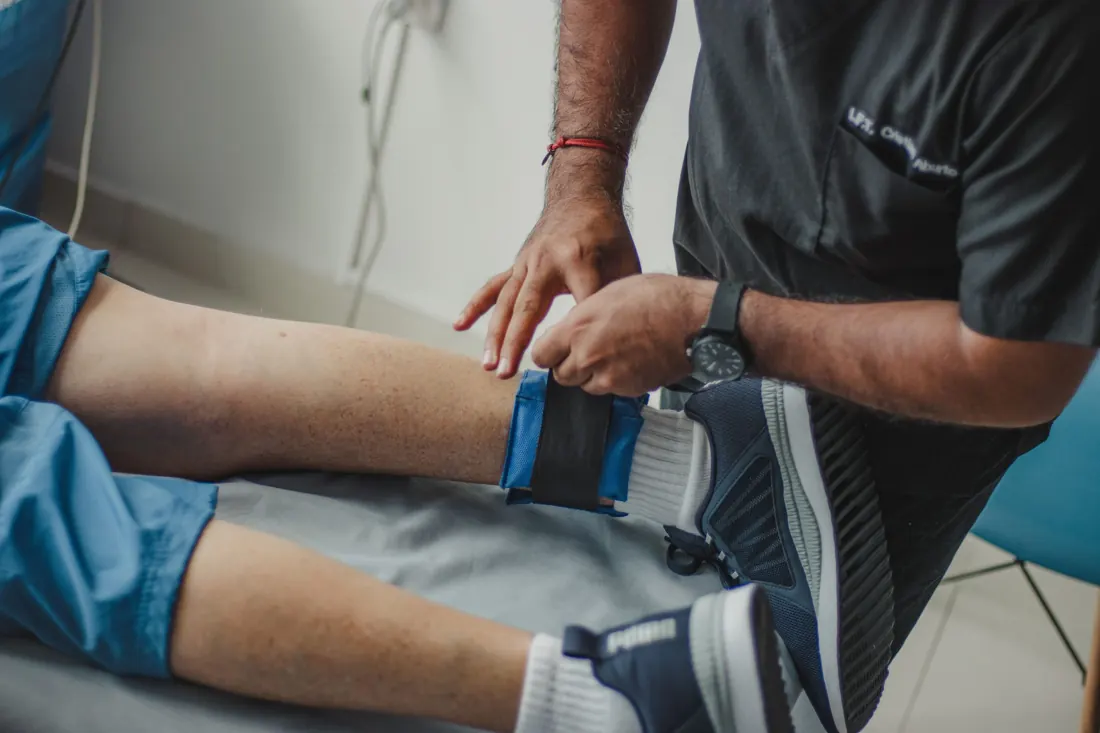
An orthopedic surgeon treats conditions of the musculoskeletal system: bones, joints, ligaments, tendons, muscles and the spine. That includes fractures, arthritis, sports injuries, tendon and ligament tears, back and neck problems and joint pain. Many patients are treated without surgery, with operations reserved for problems that need them.
Orthopedics is the medical specialty concerned with how the body moves. An orthopedic surgeon is a physician who completed medical school, a surgical residency in orthopedics and often additional fellowship training in a focused area. The word "surgeon" describes their training and ability to operate, but it does not mean every patient ends up in the operating room. A large share of a typical practice involves diagnosing problems, explaining options and recommending therapy, bracing, injections or activity changes.
The main areas of the body
| Area | Examples of what is evaluated |
|---|---|
| Shoulder and elbow | Rotator cuff tears, shoulder instability, tennis elbow, bursitis, fractures |
| Hand and wrist | Carpal tunnel syndrome, trigger finger, wrist fractures, arthritis |
| Hip | Arthritis, labral tears, bursitis, hip fractures |
| Knee | Meniscus and ligament injuries, arthritis, kneecap pain |
| Foot and ankle | Sprains, Achilles problems, plantar fasciitis, bunions |
| Spine | Herniated discs, stenosis, sciatica, spondylolisthesis, deformity |
| Bones generally | Fractures, bone health, growth-related conditions |
Some orthopedic surgeons are generalists who treat many areas, while others focus on a single region or type of problem, for example joint replacement, sports medicine, spine or hand surgery. Our guide on the orthopedic surgeon versus sports medicine doctor goes into this distinction.
Common reasons people visit
- Sudden injuries: fractures, sprains, dislocations and torn ligaments. See is it a sprain or a fracture.
- Overuse problems: tendinitis, bursitis, runner's knee and similar issues.
- Joint wear: arthritis of the knee, hip, shoulder or hand.
- Spine complaints: neck and back pain, radiating arm or leg pain.
- Nerve entrapment: carpal tunnel and related problems.
- Follow-up care: after a fracture, after surgery, or when a second opinion is needed.
What treatment can include
The care plan is built from a ladder of options. Many problems start with education, activity changes, medication and physical therapy. Bracing, splinting or casting supports healing. Injections, such as the joint injections described on our site, may be added for selected conditions. Surgery enters when a problem is mechanical, such as a displaced fracture, a complete tendon rupture or a worn-out joint, or when conservative care has not worked. Operations range from small arthroscopic procedures to joint replacement and spine surgery, such as knee replacement or microdiscectomy.
What an orthopedic surgeon does not usually treat
Orthopedic surgeons focus on structure. Problems with chronic pain that is not tied to one structural cause, nerve diseases, autoimmune arthritis requiring ongoing medication such as rheumatoid arthritis, and many circulation or skin problems fall mainly to other specialties, such as pain medicine, neurology, rheumatology and vascular medicine, although orthopedic surgeons may coordinate care with them. Heart or abdominal causes of shoulder or back pain also need those specialists. If you are unsure whom to see first, the which specialist tool can help.
When it makes sense to book
- Pain that has not improved after a couple of weeks of self-care.
- An injury with swelling, instability or loss of motion.
- Pain that limits sleep, work or daily tasks.
- Locking, catching or giving way in a joint.
- Weakness, numbness or tingling in an arm or leg.
- A need for a second opinion before surgery. See what to ask before orthopedic surgery.
Whether you need a referral depends on your insurance, and our guide to referrals for an orthopedic doctor explains how that works.
Emergencies
Go to the emergency room or call 911 for a bone that has broken the skin, a limb that looks deformed, a hand or foot that is numb, cold or pale after an injury, a severe injury with heavy bleeding, a hot red swollen joint with fever, or back pain with loss of bladder or bowel control or numbness in the groin. Orthopedic problems that threaten a limb or the nerves cannot wait for an office appointment.
How a visit usually goes
Expect questions about when the problem started, what you were doing, what makes it better or worse, and how it affects daily life. The surgeon examines the affected area, moving the joint and testing strength, and may order an X-ray in the office or an MRI or CT elsewhere. You then discuss what was found and the options, including doing nothing for now. A good visit ends with a clear plan and next steps, not just a diagnosis. Bring prior imaging and a medication list, and see what to bring to a first orthopedic visit.
Children, adults and older adults
Orthopedic problems change across the lifespan. Children may be seen for fractures involving growth plates, scoliosis, clubfoot or hip development issues, often by pediatric orthopedic specialists. Adults commonly bring sports injuries, overuse problems and early arthritis. Older adults more often present with joint wear, hip and wrist fractures after falls, spinal narrowing and the need to keep moving independently. A surgeon who sees patients of one age group regularly has a feel for what is typical, so if your problem is specific to a stage of life, ask whether they treat it often.
Surgeon training in brief
After medical school, orthopedic surgeons complete a multi-year residency in orthopedic surgery and may add a fellowship in a subspecialty. Many pursue board certification. You can usually verify licensure through your state medical board. Titles such as "sports medicine," "joint replacement" or "spine" tell you where a surgeon spends most of their time, which can matter when the problem is a specific one.
Orthopedic surgeon versus other clinicians
Several professionals care for muscles and bones. Physical therapists focus on rehabilitation, chiropractors on spinal manipulation and related care, and sports medicine physicians may be trained in nonsurgical orthopedics. Primary care clinicians handle many early complaints. Our guide to orthopedic doctor versus chiropractor compares roles, and you can contact us with questions about scheduling.
Sources
- MedlinePlus: Joint Disorders
- NIAMS: Sports Injuries
- OrthoInfo (AAOS): Low Back Pain
- MedlinePlus: Shoulder Injuries and Disorders
General information, not legal, tax or insurance advice. Your plan documents and insurer decide coverage; we confirm your actual benefits before you book.