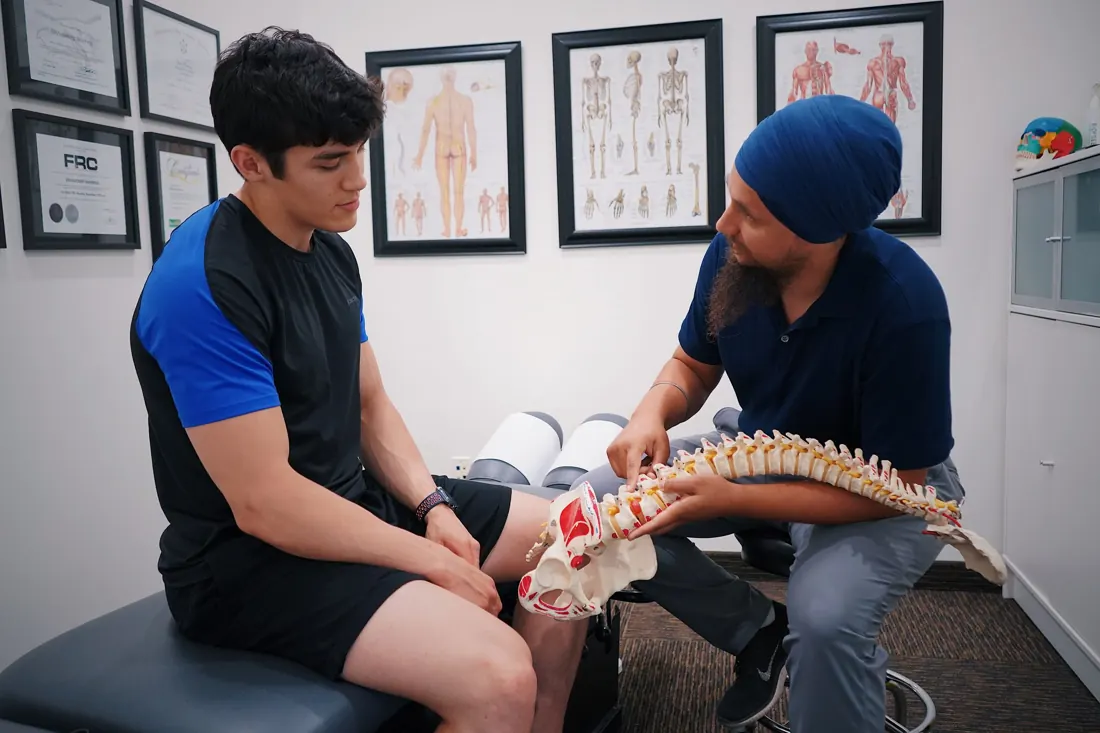
A spine surgeon is a surgeon who focuses on the spine, and may be trained as an orthopedic surgeon or a neurosurgeon. Both complete extensive surgical training and often perform the same spine operations. Neurosurgeons also treat the brain and nerves. Experience with your specific condition matters more than the title alone.
"Spine surgeon" describes a focus, not a single training pathway. Two doctors may be spine surgeons and arrive there through different residencies. One trained in orthopedic surgery, which covers bones, joints and the spine. The other trained in neurosurgery, which covers the nervous system including the brain, spinal cord and nerves. Each then usually adds focused experience, often through a spine fellowship, and each is licensed to operate on the spine.
Two training paths
| Orthopedic spine surgeon | Neurosurgeon who does spine | |
|---|---|---|
| Residency | Orthopedic surgery | Neurosurgery |
| Scope of specialty | Bones, joints, muscles, spine | Brain, spinal cord, nerves, spine |
| Spine focus | Often through a spine fellowship | Often through spine or complex spine training |
| Common spine work | Fusion, discectomy, decompression, deformity such as scoliosis | Fusion, discectomy, decompression, spinal cord and nerve conditions |
| Other work | Possibly hips, knees, trauma if not spine-only | Possibly brain surgery, tumors, if not spine-only |
The first message of this table is overlap. Both can treat herniated discs, spinal stenosis, slipped vertebrae and many degenerative conditions, and both perform procedures like laminectomy, microdiscectomy and spinal fusion. Training differences tend to show up at the edges. Some neurosurgeons concentrate on tumors, spinal cord problems or intradural surgery, while some orthopedic spine surgeons concentrate on deformity such as scoliosis, trauma or reconstruction.
What a spine surgeon does day to day
- Evaluates back, neck, arm and leg symptoms and reviews imaging.
- Explains diagnoses, such as whether symptoms match what the MRI shows.
- Coordinates nonsurgical care with physical therapy and pain specialists.
- Decides when surgery is reasonable and which operation fits.
- Performs operations and manages recovery afterward.
Much of the work is nonsurgical. The American Academy of Orthopaedic Surgeons notes that only a small percentage of people with a lumbar disc herniation require surgery, and that surgery is typically considered after a period of nonsurgical treatment or if there is weakness or loss of bladder or bowel control. A surgeon who spends time explaining options without pushing an operation is behaving in line with that guidance.
What matters more than the title
- Training and board certification in orthopedic surgery or neurosurgery, plus spine-specific fellowship training where applicable.
- Experience with your condition. Ask how often they treat it and what the usual path looks like.
- Willingness to discuss nonsurgical options and explain why surgery is or is not suggested.
- Clear communication about risks, recovery and alternatives.
- Openness to a second opinion. See second opinion before spine surgery.
Who else treats the spine
Not every spine problem needs a surgeon. Physiatrists (rehabilitation physicians), pain management physicians, primary care clinicians, physical therapists and neurologists all play roles. Pain specialists, for example, focus on injections and procedures rather than operations, as covered in what a pain management doctor does. For a mild or recent problem, starting with non-operative care is common, and our guide on when to see a spine specialist explains timing.
Red flags that mean the emergency room, not an appointment
Call 911 or go to the nearest emergency room for back or neck pain with numbness in the groin or inner thighs, new loss of bladder or bowel control, rapidly worsening weakness in a leg or arm, trouble walking or balancing, fever with severe back pain, or pain after significant trauma. In those situations the on-call surgical team at a hospital evaluates you, and which specialty they are matters far less than speed.
Conditions that often reach a spine surgeon
Surgeons in both specialties commonly see herniated discs, lumbar and cervical stenosis, slipped vertebrae, degenerative disc disease, pinched nerves in the neck or back, spinal fractures and curvature problems such as scoliosis. Most of these are first treated nonsurgically. A smaller group, including spinal cord compression, progressive weakness and instability, tends to move toward surgery sooner. When you see a surgeon, the visit is a chance to learn which group your problem fits, and what the plan is if you are not ready for an operation.
Operations you may hear about
The vocabulary can be confusing. A discectomy removes part of a disc pressing on a nerve. A laminectomy removes part of the bone to create room for nerves. A fusion joins vertebrae so they heal into one segment, and an artificial disc replacement keeps motion at a level. Minimally invasive and endoscopic approaches use smaller openings for selected problems. Ask your surgeon which one is being suggested, why it fits, and what the main alternatives would be. Both specialties perform these procedures, and the best match depends on your anatomy and findings.
Questions about experience
- How many times a month or year do you perform this specific procedure?
- What do you consider a good result for someone like me?
- What are the most common complications, and how are they handled?
- When would you advise against surgery for this problem?
- How do you coordinate with physical therapy and pain management?
Making the choice in practice
For most people, the choice happens through a combination of referral, insurance and availability. If you have two surgeons suggesting different plans, one trained in each specialty, that is a reason for a conversation, not a contest. Ask each what findings drive the recommendation and what the nonsurgical alternatives would be. Bring images on a disc or portal link, and see how to get records sent. A clinic can help you find the right fit using the which specialist tool or via the contact page.
Sources
- OrthoInfo (AAOS): Herniated Disk in the Lower Back
- OrthoInfo (AAOS): Low Back Pain
- NIAMS: Spinal Stenosis
- MedlinePlus: Back Pain
General information, not legal, tax or insurance advice. Your plan documents and insurer decide coverage; we confirm your actual benefits before you book.