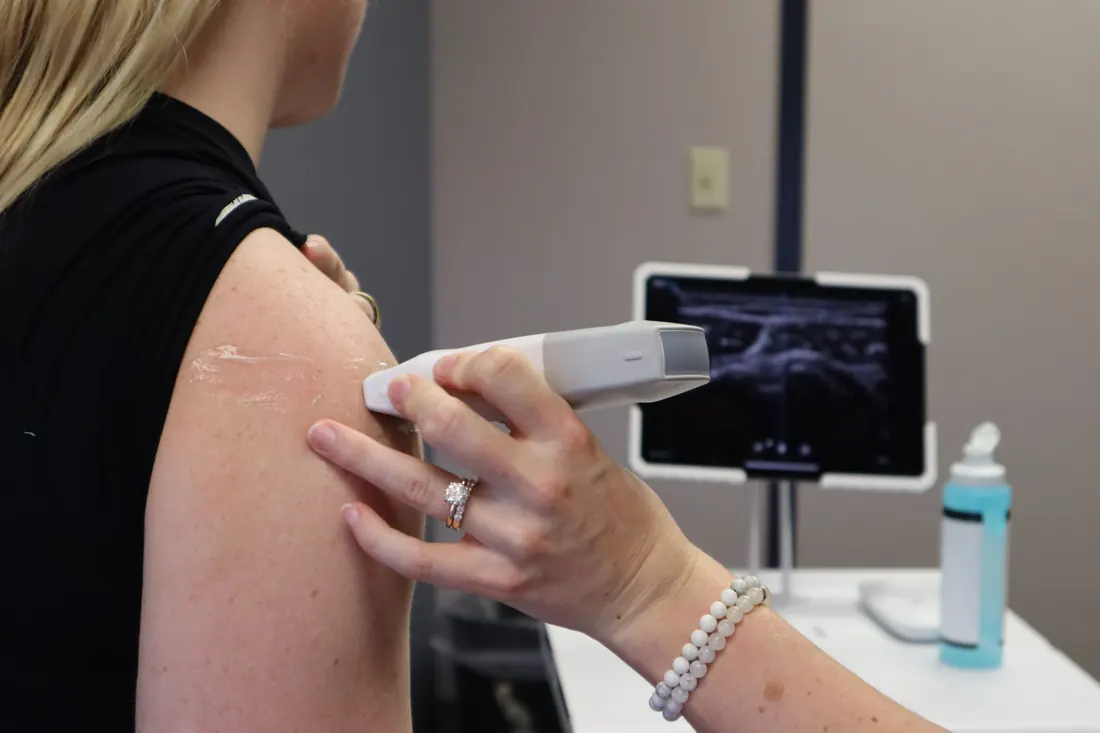
The cost of a trigger point injection depends on how many muscles are injected, the medication, the visit charge, any imaging, and your plan. Some plans limit certain injections, so check yours. Ask for a quote or Good Faith Estimate that states the number of muscles and whether the visit is included.
A trigger point injection is a short procedure for a tight, tender spot in a muscle, and the visit can be brief. That does not make the bill simple. The number of muscles treated, the medication, and whether a plan treats the service as covered all change what you owe. This page separates those pieces.
What the procedure is and what is billed
OrthoInfo describes trigger point injections as injecting a combination of local anesthetic and, typically, an anti-inflammatory such as a steroid into the problem area, and says they can usually be done without X-ray guidance. It lists fibromyalgia, tension headache and myofascial pain syndrome among the conditions commonly treated this way. On a bill, you can expect:
- The visit. The evaluation, which is its own line, especially when it is a new problem.
- The injection procedure. Billed in groups according to the number of muscles injected, so a session that treats several muscles is a different line from one that treats one or two.
- The medication. The anesthetic and any added medicine may be a supply line.
- Guidance, if used. Since the procedure is usually done without X-ray guidance, an imaging line is uncommon, but ultrasound is sometimes used and is then separate.
- Follow-up visits. A return visit to check the response is a separate service.
What changes the total
How many muscles in one session
The count of muscles injected, not the number of needle passes, tends to set the code. Ask the office how many muscles the quote assumes and what happens if more spots are found at the visit.
Visit level and same-day services
A short procedure paired with a full evaluation can produce two lines. Ask whether the visit is quoted with the injection or apart from it, and whether an established patient visit is priced differently from a new one.
Dry needling is a different service
OrthoInfo notes that a similar technique called dry needling, in which a needle without medication is inserted into the trigger point, can be performed in a physical therapy office. It may be billed under a different arrangement and covered differently. When you compare quotes, confirm that both describe the same service. The treatment page on trigger point injections explains the procedure.
Check your plan for limits
Some plans limit or exclude certain injections, so check your plan. HealthCare.gov defines excluded services as health care services that a plan does not pay for or cover. For a trigger point injection, ask whether the plan covers the procedure for your diagnosis, whether it limits how many sessions it pays for in a year, and whether any prior approval is needed. Use the plan's own wording, and write down the date and the name of the person who answered.
Out-of-network benefits
If the practice is out of network, the plan evaluates each billed line against its allowed amount. It then applies your remaining out-of-network deductible, pays coinsurance on what is left, and may leave the difference for the provider to bill, which HealthCare.gov calls balance billing. Because this procedure is relatively short, the visit line can be a large share of the bill. Put the plan's numbers into the out-of-network cost calculator to see the split.
Self-pay and the Good Faith Estimate
If you are paying yourself, CMS says providers generally must give you a good faith estimate when you schedule care at least 3 business days ahead or ask for one, and you may be able to dispute a bill that is at least $400 above it. Ask that the estimate list the visit, the number of muscles, the medication and any guidance. Our Good Faith Estimate guide and the self-pay page go into detail. Ask us whether this injection is offered at the office nearest you.
Hypothetical example: out-of-network trigger point injections
These invented round numbers are for illustration only. They are not a price from any provider.
| Line | Charge | Plan allowed amount |
|---|---|---|
| Office visit | $250 | $125 |
| Injections, three muscles | $300 | $150 |
| Medication | $50 | $25 |
| Total | $600 | $300 |
- Suppose the remaining out-of-network deductible is $100.
- The plan pays 80% of the remaining $200 allowed, which is $160.
- Your coinsurance is the other $40.
- The provider bills the $300 gap between charge and allowed amount.
Here you owe $100 plus $40 plus $300, or $440. With a plan that does not recognize the service, the whole $600 would be yours.
When the quote is a range
Trigger points are found by examination, so the clinician may not know how many spots need treatment until the visit. An honest office can give a range or a stated maximum. If you receive a single figure, ask what it assumes, and ask what the charge would be for one more muscle. Also ask whether treating a muscle on both sides counts as one or two. These small details are the ones that turn a quote into a surprise bill when they are left unsaid.
Records to keep
Save the written estimate, the itemized receipt, the date and the muscles treated. If you submit a claim to an out-of-network plan, an itemized receipt is the document it will ask for, and our superbill guide explains what it should show. Keeping a short note of how you felt before and after is for your clinician's use, not for any billing reason.
Questions to ask before you book
- How many muscles does the quote cover?
- Is the visit included or separate?
- Is the medication a separate line?
- Is this the same service as dry needling at a therapy office?
- Does my plan limit the number of sessions or need approval?
- Can I have the estimate in writing?
For background on the pain pattern behind these injections, see myofascial pain syndrome and chronic neck and shoulder tension. Contact us with questions.
Sources
- OrthoInfo (AAOS): Spinal injections
- HealthCare.gov glossary: Excluded services
- CMS: Understanding costs in advance
- HealthCare.gov glossary: Balance billing
General information, not legal, tax or insurance advice. Your plan documents and insurer decide coverage; we confirm your actual benefits before you book.