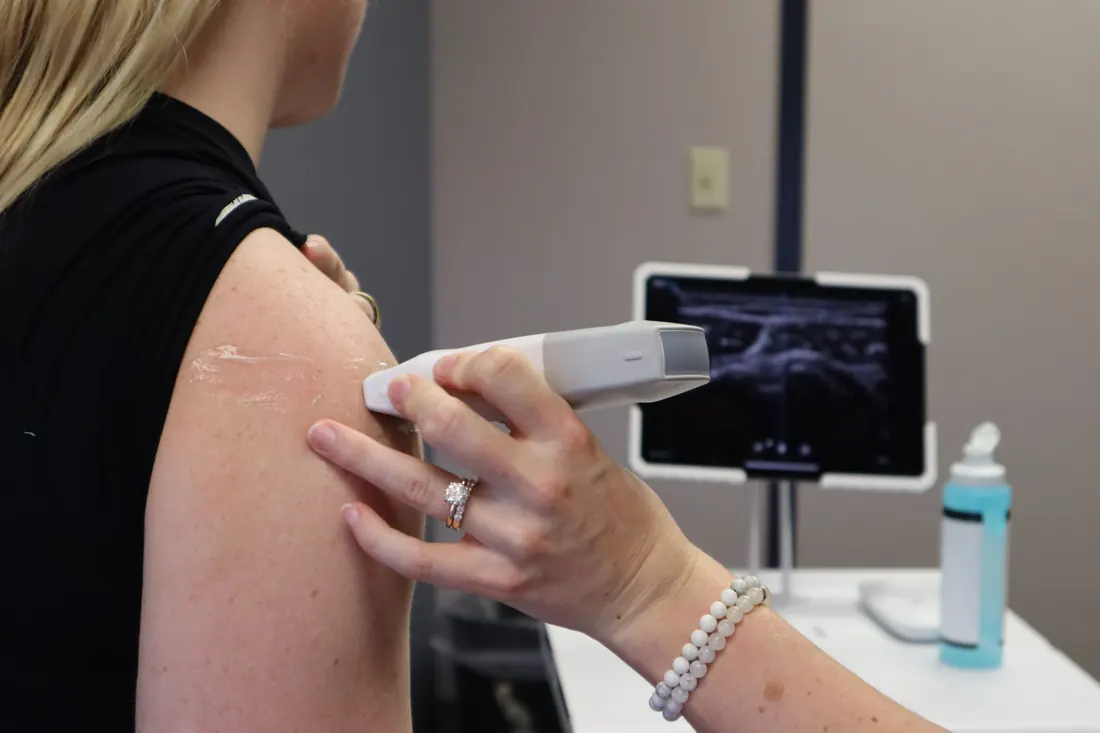
The cost of a PRP injection depends on the blood draw and preparation kit, the injection site and number of sites, whether imaging guides the needle, and whether a series is planned. Some plans limit or exclude it, so check your plan. Ask for a written estimate covering the whole plan of care.
Platelet-rich plasma is the injection people most often ask about and least often find a clear bill for. Part of the reason is the procedure: it starts with a blood draw and a lab step, and part is that plans do not all treat it the same way. This page explains what the pieces are and how to ask for a quote that holds together.
What PRP involves, and what that means for billing
OrthoInfo explains that PRP is plasma with more platelets than blood typically has, made by drawing blood from the patient, spinning it in a centrifuge to separate the platelets, and then injecting the concentrate into the injured site. That sequence maps to the bill:
- Visit. The evaluation that decides whether PRP is a reasonable option.
- Blood draw. Collecting the sample, which may be bundled or listed separately.
- Preparation. The kit, the centrifuge step and the technician time to prepare the concentrate. Kits vary by system, and so does their cost.
- Injection procedure. Placing the product in a tendon, joint or other site.
- Image guidance. Ultrasound is often used to place the needle precisely, and may be its own line.
- Follow-up visits. A check afterward is typically a separate visit.
What changes the total
Site and number of sites
A tendon at the elbow and a knee joint are not the same procedure. Treating more than one site in a session adds lines. See the treatment page on PRP injections for the places it is commonly discussed.
Preparation system
Different systems produce different preparations, and OrthoInfo notes that the preparation, including the cellular makeup of what is injected, is one factor that can influence effectiveness. For billing, the system also drives the kit cost. Ask which system the office uses and whether the supply is in the quote.
One session or a series
Some plans of care use more than one injection. A quote for a single session is not the cost of a course, so ask what the practice expects and whether the quote covers all sessions.
Check your plan before you assume coverage
Some plans limit or exclude certain injections, and PRP is a frequent example, so check your plan. OrthoInfo says research on PRP is ongoing and that, for some chronic tendon problems, it is difficult to say it is more effective than traditional treatment. Whether a plan pays often turns on how it classifies the service. HealthCare.gov defines excluded services as health care services that a plan does not pay for or cover, and says preauthorization is not a promise of payment. Ask the plan for its written position on the exact service and diagnosis, and keep the reference number of the call. Do not rely on what a website or another patient says about a plan, since plans differ by employer, by year and by the exact diagnosis on the claim.
Out-of-network benefits, if the plan does cover it
If your plan does recognize the service, the out-of-network steps are the usual ones: the plan applies its allowed amount to each line, then your deductible and coinsurance, and the provider may bill the difference. If it does not, the practice's full charge is yours. The out-of-network cost calculator can show both outcomes next to each other.
Self-pay and the Good Faith Estimate
If PRP is a service you will pay for yourself, ask for a Good Faith Estimate even if you also hold insurance, and ask for the total for the whole plan of care. CMS says providers generally must give you one if you are not using insurance and you schedule at least 3 business days ahead or request it. Our Good Faith Estimate guide and the self-pay page go through it. Please ask us whether PRP is offered at the office nearest you, since not every service is available at every location.
Hypothetical example: PRP for one tendon, paying yourself
The following numbers are invented, round and offered as illustration only. They are not a price from any provider.
| Line | Amount |
|---|---|
| Evaluation visit | $300 |
| Blood draw and preparation kit | $500 |
| Injection procedure with ultrasound guidance | $700 |
| Follow-up visit | $200 |
| Total for one session and a check | $1,700 |
Suppose a second session is planned. In this example the quote should state whether it adds another $1,200 for the kit and procedure or another $1,700 including a new evaluation. If the plan does not cover PRP, the whole $1,700 is out of pocket. If it did cover part, the allowed amount, deductible and coinsurance would apply as in other examples on this site.
Records worth keeping
Because PRP is billed in pieces and coverage varies, keep a small file. Save the written estimate, the itemized receipt for every session, the name of the preparation system, the date of each injection and any message from your plan about coverage. If a claim is denied, or if you later ask a plan or an employer account administrator to reconsider, those papers are what make the request specific and easy for someone else to check quickly. Our superbill guide explains the itemized receipt that out-of-network claims commonly rely on.
Questions to ask before you book
- What system is used, and is the kit in the quote?
- Is image guidance included?
- How many sessions does the plan of care assume, and is the quote for one or all?
- Is the follow-up visit billed separately?
- Has my plan said in writing whether it covers this service?
- Can I get a written estimate before I commit?
Background on the conditions it is discussed for is on tennis elbow and knee arthritis. For help with the questions, contact us.
Sources
- OrthoInfo (AAOS): Platelet-rich plasma (PRP)
- HealthCare.gov glossary: Excluded services
- HealthCare.gov glossary: Preauthorization
- CMS: Understanding costs in advance
General information, not legal, tax or insurance advice. Your plan documents and insurer decide coverage; we confirm your actual benefits before you book.