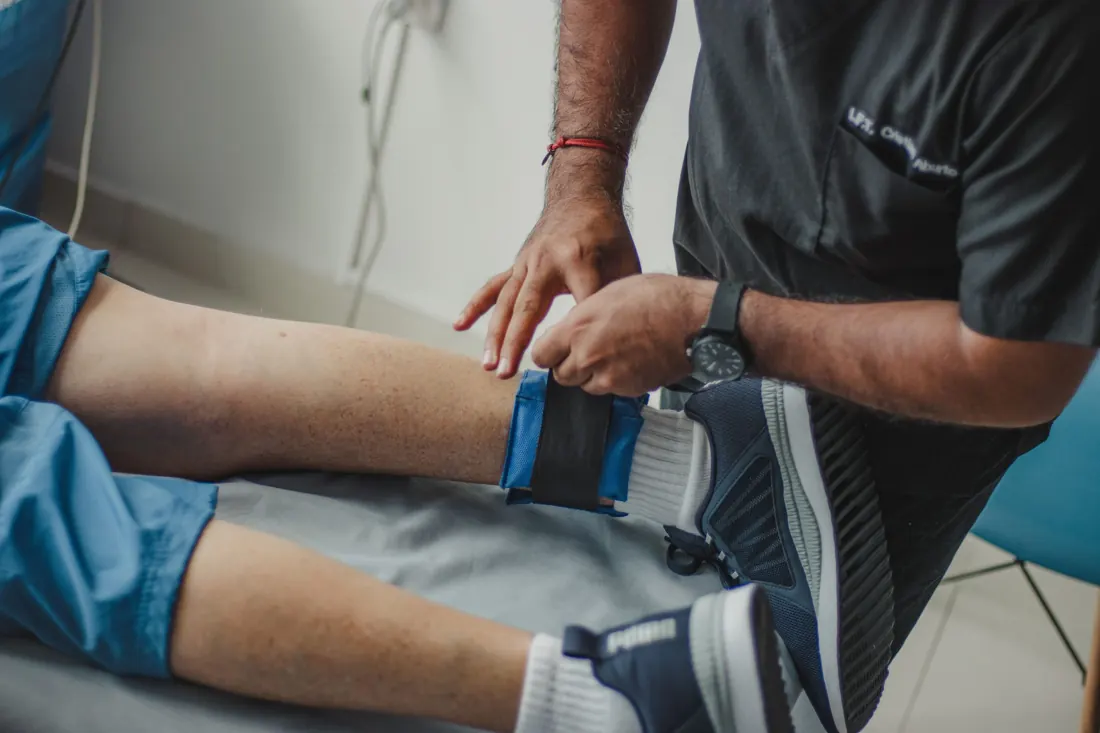
Osteoarthritis is gradual loss of the smooth cartilage that cushions a joint, along with changes in the bone and joint lining. It causes aching, stiffness and reduced motion, most often in the knees, hips, hands and spine. Treatment begins with exercise, weight and activity changes, then injections, and surgery only when other care has not been enough.
Osteoarthritis is the most common form of arthritis. It is often described as wear and tear, but that undersells it: the whole joint is involved, including cartilage, the bone beneath it, the lining and the supporting muscles. It tends to be slow, uneven and very different from one person to the next, and the amount of pain does not always match what an X-ray shows.
What happens inside the joint
Cartilage is the smooth, cushioned surface that lets bone ends glide. In osteoarthritis that surface thins and roughens. The bone underneath responds by thickening and forming spurs, and the joint lining can become irritated and produce extra fluid. The knees, hips, hands, big toes and spine are most often affected, usually in joints that have carried load for decades or were injured earlier in life.
Who is more likely to develop it
- Older adults, though it also appears earlier after a joint injury such as a ligament or meniscus tear.
- People with a family history of joint arthritis.
- People carrying extra body weight, which adds load to the knees and hips.
- Those whose work or sport involves repetitive kneeling, squatting or heavy lifting.
- Joints with an alignment problem or an old fracture that healed unevenly.
Symptoms
- Aching that builds with activity and settles with rest, at least early on.
- Stiffness after sitting or on waking that usually eases within about half an hour.
- Swelling or a bony enlargement around the joint.
- Grinding, creaking or catching with movement.
- Reduced range of motion and, over time, trouble with stairs, getting up from a chair or gripping.
- Pain at rest and at night in more advanced disease.
When to get urgent help
Call 911 or go to the nearest emergency room if a joint injury leaves you unable to bear any weight, the limb looks deformed, or the joint is hot, red and swollen with fever or chills, since an infected joint is an emergency. Chest pain, shortness of breath or new weakness in a limb also need emergency care. Arrange to be seen within a few days if a joint locks, repeatedly gives way, swells rapidly after minor activity, or if pain is waking you at night.
How it is diagnosed
The diagnosis starts with your history and an examination of the joint, its motion, alignment and the way you walk. Standard X-rays are the usual first test and can show narrowed joint space, spurs and bone changes. MRI is not needed in most cases but can be useful when a meniscus tear, cartilage defect or another cause is suspected. Blood tests are sometimes ordered to rule out inflammatory types such as rheumatoid arthritis or gout. Fluid drawn from a swollen joint can help identify crystals or infection.
Treatment, starting with the least invasive
There is no treatment that reverses cartilage loss, so the goals are less pain, better function and slower progression of the things you can influence. Most people begin here.
- Movement and strengthening. Regular low-impact activity and targeted exercise for the muscles around the joint are among the best-supported measures. Supervised physical therapy can set up a program you can continue at home.
- Weight management. Even modest weight loss reduces load on the knees and hips.
- Activity changes, braces and walking aids. A cane held on the opposite side, shoe changes or an unloader brace can shift stress off a painful compartment.
- Heat, cold and topical products. These may ease symptoms for some people.
- Medication. Over-the-counter pain relievers and anti-inflammatory drugs are common choices. They are not safe for everyone, particularly with kidney, stomach, heart or blood pressure problems, so check with a clinician before starting or continuing them.
- Injections. Corticosteroid injections can calm a flare for a limited time, and hyaluronic acid injections are sometimes used in the knee. See joint injections for how they are used and their limits. Ask us whether regenerative options such as platelet-rich plasma are offered at the office nearest you, and be aware that the evidence for them is still developing.
When surgery enters the conversation
Surgery is usually considered after a good trial of non-surgical care has stopped working, when pain limits sleep, walking or work, and when imaging confirms advanced damage. Arthroscopic cleanup has a narrow role in osteoarthritis and is not generally recommended for simple wear. Realignment procedures are sometimes used in younger, active people with damage in one part of the knee. Joint replacement is the standard operation for advanced hip and knee disease; see knee replacement and the related pages on knee arthritis and hip arthritis. Fusion is used for some small joints of the foot and hand.
Recovery and what to expect
Osteoarthritis tends to wax and wane. A flare may last days to a few weeks, and many people find that a steady exercise habit keeps symptoms manageable for years. After a joint replacement, walking with support usually begins within a day or two, many people are back to light daily activity in several weeks, and gains in strength and comfort can continue for six months to a year. Recovery varies with age, general health and the preparation done beforehand.
Living with it day to day
Pacing helps. Alternating heavier tasks with lighter ones, using a stool in the kitchen, and choosing cushioned footwear can cut down on flares. Swimming, cycling and walking on level ground tend to be better tolerated than running on pavement. Keep a short pain diary for a few weeks; it makes the next appointment more productive.
Being seen out-of-network or self-pay
Arthritis care often spans months or years, so cost matters as much as the clinical plan. Imaging, injections and a surgical opinion each have their own billing, and it helps to know which parts your plan treats as out-of-network benefits.
Elite MD Care sees patients who use out-of-network benefits and patients who pay directly. If you plan to use benefits, ask your plan what it allows for office visits, X-rays and injections from an out-of-network provider. If you pay directly, ask the office in advance what an evaluation and any imaging would involve. Read how out-of-network visits and self-pay care work, estimate your own share with the out-of-network cost calculator, and see our orthopedics page.
Sources
- American Academy of Orthopaedic Surgeons, OrthoInfo. Osteoarthritis
- National Institute of Arthritis and Musculoskeletal and Skin Diseases (NIH). Osteoarthritis
- MedlinePlus (National Library of Medicine). Osteoarthritis
This page is general health information and is not medical advice. It does not create a physician-patient relationship. Consult a qualified clinician about your own symptoms and treatment.