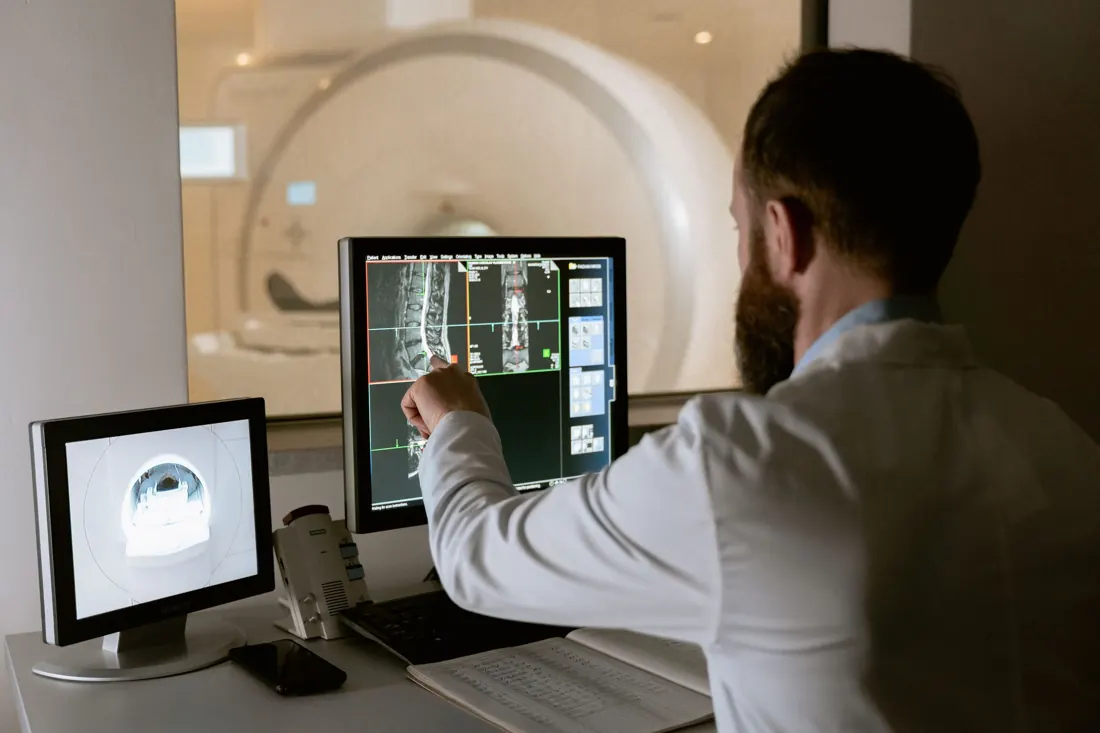
The cost of an EMG and nerve conduction study depends on how many nerves and muscles are tested, whether one limb or two, who performs and interprets it, and the setting. The final count is set during the test. Ask for a written estimate that gives units or a range and names the interpretation fee.
An EMG and nerve conduction study is ordered when numbness, tingling or weakness needs a closer look at the nerves and muscles. It is a bundle, not a single item, and the bill reflects that. This page walks through the parts of that bundle so a quote makes sense.
What the test involves
MedlinePlus says electromyography checks the health of the muscles and the nerves that control them, using a very thin needle electrode placed in a muscle. It also says a nerve conduction velocity test is almost always done during the same visit, using surface electrodes on the skin to measure how fast electrical signals move through a nerve. Two tests in one sitting means two groups of codes.
What is billed
| Piece | What it covers |
|---|---|
| Nerve conduction studies | Each nerve tested adds to the count |
| Needle EMG | Counted by the number of muscles and limbs sampled |
| Technical component | The equipment, the room and the technologist or assistant, when the clinic bills it apart |
| Interpretation | The physician who performs or reviews the study and writes the report |
| Ordering visit | The appointment that led to the test, billed on its own |
| Follow-up visit | Reviewing the result and planning care, usually a separate visit |
What changes the total
How many nerves and muscles
A test for one wrist looks different from a study of an arm and a leg. The number of nerves and muscles tested is set during the test, depending on what the examiner finds, so a quote is often an estimate with a range of units rather than a fixed figure. Ask how the office handles a test that needs more nerves than planned.
One limb or both
Comparing sides is common, and testing both sides roughly doubles the units. If your concern is one hand, ask whether the quote assumes both.
Setting and who performs it
An EMG can be done in a hospital lab, a neurology office or an orthopedic or physiatry office. The performing physician, not the building, usually determines whether interpretation is billed separately, but a hospital lab adds its own facility line.
Out-of-network benefits for an EMG
Many plans want a medical reason on file for electrodiagnostic testing. For out-of-network use, the plan prices each billed unit against its allowed amount, subtracts any remaining out-of-network deductible, and pays its coinsurance on the rest. The provider can bill the difference as balance billing. Because the number of units is not final until the test ends, the share you owe is easiest to estimate with ranges. The out-of-network cost calculator lets you try a low and a high total.
Ask the plan whether it wants preauthorization first. HealthCare.gov says preauthorization is a decision that a service is medically necessary, not a promise of payment, so confirm it in writing.
Self-pay and No Surprises Act protections
If you are paying yourself, ask for a written estimate that lists the units or the maximum number of nerves and muscles, and says what the interpretation fee is. CMS describes the good faith estimate for people who do not use insurance and says a bill that runs at least $400 over the estimate may be disputed. Our Good Faith Estimate guide shows what a complete estimate lists, and the self-pay page covers payment options. Ask us whether electrodiagnostic testing is offered at the office nearest you.
Hypothetical example: an out-of-network EMG and nerve conduction study
These invented round numbers are an illustration only. They are not a price from any provider.
| Line | Charge | Plan allowed amount |
|---|---|---|
| Nerve conduction studies, one arm | $600 | $300 |
| Needle EMG, one arm | $500 | $250 |
| Interpretation and report | $200 | $100 |
| Total | $1,300 | $650 |
- Suppose your remaining out-of-network deductible is $250.
- The plan pays 70% of the remaining $400 of allowed charges, which is $280.
- Your coinsurance is the other $120.
- The gap between charge and allowed amount is $650.
In this example you owe $250 plus $120 plus $650, or $1,020. If the examiner tests more nerves, every line rises, which is why a range is the honest figure.
Before and after the test
MedlinePlus says no special preparation is usually necessary, and that creams or lotions should be avoided on the day of the test. It also says to tell the provider if you take blood thinners. Those are practical points, but they also touch cost: a test postponed because of lotion, or one that needs repeating because information was missing, can mean a second visit and a second charge. Bring your medication list and any earlier nerve test reports, and ask the office to confirm what it needs from you in advance.
Afterward, the result is usually discussed at a follow-up visit with the clinician who ordered it. Ask whether that conversation is billed as a visit, and keep the written report in your records. If a second clinician will need the result, ask the office to send it directly, which saves repeating the study and a second charge for it.
Questions to ask before you book
- Is the quote for one limb or both?
- How many nerves and muscles does it assume, and what happens if more are needed?
- Is the interpretation fee included?
- Who performs the study, and where?
- Does my plan want preauthorization and a prior visit on file?
- Will the follow-up visit to review results be billed separately?
People are often sent for this test for hand or arm symptoms. See carpal tunnel syndrome and cervical radiculopathy for the conditions it helps sort out, or arm numbness and tingling for what to note before the visit. Contact us with questions.
Sources
- MedlinePlus: Electromyography
- MedlinePlus: Nerve conduction velocity
- HealthCare.gov glossary: Preauthorization
- CMS: Understanding costs in advance
General information, not legal, tax or insurance advice. Your plan documents and insurer decide coverage; we confirm your actual benefits before you book.